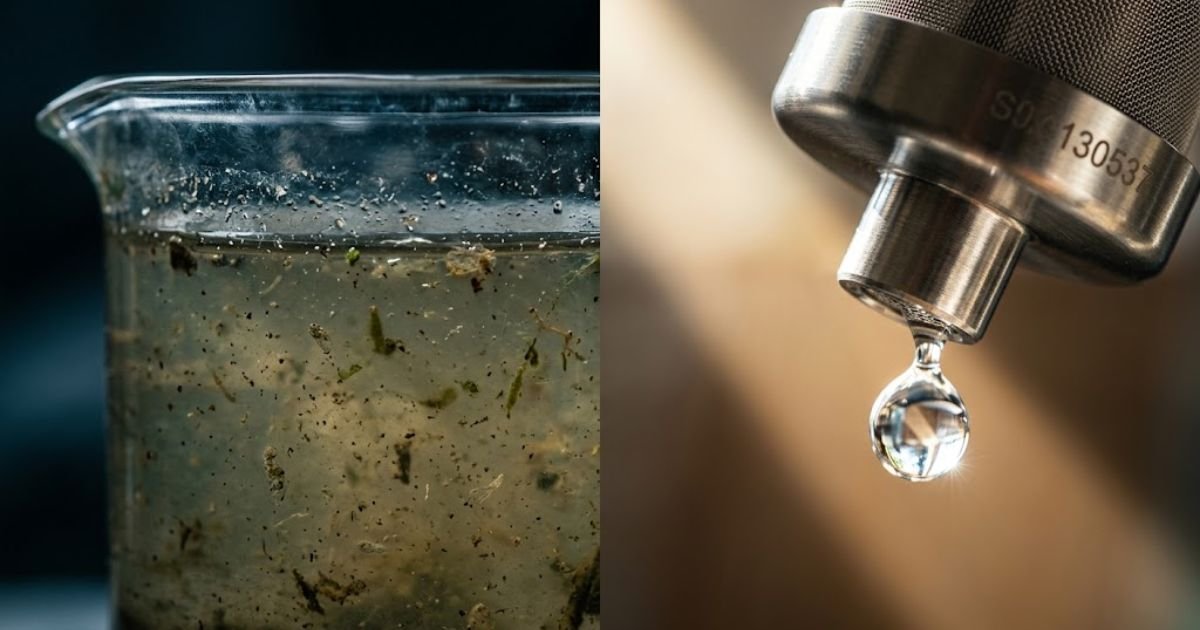
You’re looking at the Water Freedom System, and the most critical question on your mind is likely this: is the Water Freedom System safe to drink from on a daily basis? Let’s strip away the hype and look at the actual physics of the machine. There’s a specific kind of silence that falls over a kitchen when the tap runs dry. Or worse, when the water coming out of it smells faintly of rust and regret.
That’s the exact moment the dream of off-grid independence collides with a very primal, very human fear: What if I make my family sick?
You’re looking at the Water Freedom System. It promises liberation from the grid, from chemical tastes, from the vulnerability of municipal infrastructure. But before you turn that handle and take a drink, you need to know the truth. Not the marketing spin. The actual, unvarnished physics of what’s happening inside those plastic housings.
Let’s strip away the hype and look at the machine.
Is Water from the Water Freedom System Safe to Drink?
Let’s cut right to the bone. Yes. Water from the Water Freedom System is safe to drink.
But “safe” is a loaded word in the survival community. It’s not a magic shield; it’s a conditional promise. The water is only as safe as the hands that built it and the source it pulls from. If you want to drink from it without looking over your shoulder, four non-negotiable rules apply:
- Your source water has to make sense. You can’t filter heavy salt water or raw sewage through this. It’s built for rain catchment, clear surface water, and municipal tap.
- Assembly must be flawless. A pinched O-ring or a cross-threaded housing will ruin the entire system.
- Maintenance isn’t a suggestion. If you ignore the gallon-capacity limits, you’re breeding bacteria.
- Dirty water needs a pre-filter. If you’re pulling from a murky pond, you have to strain the sediment first, or you’ll blind the main membranes in hours.
How the Purification Mechanics Work
To actually trust the water, you have to understand the machine. It’s not alchemy. It’s physics. And it’s beautiful in its simplicity.
The Filtration Matrix: Sediment, Carbon, and Micro-Pore Dynamics
Think of the system as a bouncer at a very exclusive club, working in three distinct stages.
First, the water hits the 5-micron sediment pre-filter. This is the physical bouncer. Through sheer size exclusion, it catches the big, ugly stuff—rust, sand, silt. It takes the physical beating so the rest of the system doesn’t have to.
Then, the water flows into the activated carbon block. This is where chemistry takes over. The carbon acts like a microscopic sponge, adsorbing chemicals as they pass. It strips out chlorine, chloramines, and the volatile organic compounds (VOCs) that make tap water taste like a swimming pool.
Finally, the water is forced through the micro-pore membrane. This is the final barricade. Ranging from 0.1 to 0.2 microns, it’s a physical wall. If a contaminant is bigger than the pore, it simply doesn’t get through. Simple. Brutal. Effective.
Addressing Bacteria, Viruses, and Parasites
This is where the anxiety usually peaks. What about the microscopic predators hiding in a creek bed?
- Parasites: Things like Giardia and Cryptosporidium are massive compared to the filter pores. They are trapped with 99.9% efficiency.
- Bacteria: Pathogens like E. coli and Salmonella are also too big to pass. The membrane stops them cold.
- Viruses: Here’s the catch. Viruses are incredibly tiny. Some are smaller than the 0.2-micron pore size. The system handles bacteria beautifully, but viruses? That requires a different conversation, which we’ll get to in a moment.
EPA Standards vs. DIY Purification: A Comparative Safety Analysis
Municipal water is heavily regulated by the EPA. How does a DIY gravity setup compare to billion-dollar treatment plants? Surprisingly well, in specific areas.
What the System Removes (Heavy Metals, Chlorine, VOCs)
When it’s working right, this system outperforms the tap. The dense carbon block chelates heavy metals like lead, copper, and mercury, dropping them well below federal action levels. It strips out the free chlorine and the carcinogenic byproducts that aging municipal pipes leach into your glass. It traps agricultural pesticides and herbicides. You’re not just cleaning the water; you’re elevating it.
The Blind Spots: What DIY Systems Cannot Filter Without Modifications
I’m not going to sell you a miracle, because miracles don’t exist in fluid dynamics. The Water Freedom System has limits, and ignoring them is how people get sick.
Long-Term Reliability: Is the Water Freedom System Safe to Drink After Months of Use?
It cannot filter dissolved inorganic solids. Nitrates, fluoride, dissolved salts—they are smaller than the pores and carry no electrical charge for the carbon to grab. If your well water is heavy in nitrates, this system will just pass them right into your cup.
And remember those viruses? If you’re pulling from a shallow creek after a heavy rain, or dealing with flood water, micro-filtration isn’t enough. You need to add a UV sterilizer or use chemical shock treatments to neutralize viral loads. Know your water. Know the limits.
Quick Answers to the Questions You’re Probably Thinking:
- I have well water, is this system enough? If your well is deep and tests clear for nitrates and coliform, yes. If it’s a shallow well near agricultural runoff, you need to add a UV stage or test for nitrates first.
- How often do I really need to change the filters? Don’t guess by time. Guess by usage. If the manual says 1,000 gallons, change it at 900. Pushing it to 1,500 to save twenty bucks isn’t frugality; it’s a gamble with your gut health.
- Can I just boil the water after filtering to be 100% safe? You can, but you don’t need to if you’re filtering clear water. Boiling is a great backup for highly questionable source water, but it won’t remove the heavy metals or chemicals the filter already handled. Ready to Secure Your Water Independence?
- Don’t wait for the next water crisis. Get your Water Freedom System today and start producing clean, safe drinking water at home.Check Current Price & Availability →
- Limited-time discounts may be available
The Crucial Variable: How User Maintenance Dictates Water Safety
Here is the hardest truth you’ll read today. The most dangerous part of your water system isn’t the source. It’s you.
The “Dirty Filter” Dilemma: Bacteria Growth in Stagnant DIY Systems
When a filter traps bacteria, those bugs are sitting right on the surface of the media. If the system sits idle for a week, or if you push the filter way past its rated capacity, something gross happens. A biofilm forms.
It’s a slimy, protective matrix where bacteria actually feast on the trapped organic gunk and multiply. Push water through that, and you’re not filtering. You’re inoculating your clean water with a concentrated bacterial load. We call it filter breakthrough. It’s nasty, and it’s entirely preventable.
5 Sensory Red Flags That Your DIY Water is Compromised
You don’t need a lab to tell you something’s wrong. Your body already has the sensors. Use them.
- The taste shifts. If your crisp water suddenly tastes metallic, earthy, or faintly swampy, the carbon is exhausted or bacteria has broken through.
- The flow chokes. A drastic drop in flow means the sediment filter is blinded. Don’t force it. Forcing water through a clogged system can rupture the internal membrane.
- The water looks cloudy. If the output looks milky (and it’s not just pressure bubbles), the micro-pore membrane has failed or channeling has occurred.
- A ghost smell. If you smell faint chlorine in the output water, the carbon adsorption sites are 100% saturated. The filter is now just a hollow plastic pipe.
- The physical housing looks tired. Inspect the O-rings monthly. If you see micro-cracks in the plastic or flattened, brittle rubber, unfiltered water is bypassing the system entirely.
Final Verdict: Should You Trust Your Health to the Water Freedom System?
You can trust it, but only if you respect it. It’s a brilliant piece of engineering, but it demands your attention. To actually make it work, you need the right gear to support it. You can’t just buy the base kit and hope for the best. You need to build a complete ecosystem.
Products / Tools / Resources
Here is the exact gear I keep in my own mudroom to ensure the Water Freedom System actually does what it’s supposed to do. These aren’t just suggestions; they are the missing links between a plastic kit and actual, verifiable survival.
1. The “Blind Spot” Fix: UV Sterilification Pen
Since the base system can’t guarantee viral neutralization, I keep a handheld UV water purifier (like the SteriPEN) in my go-bag. For high-risk surface water, I run the filtered water through the UV light before drinking. It takes 90 seconds and gives me absolute peace of mind against norovirus and hepatitis.
2. The Reality Check: TDS Meter and Test Strips
You can’t manage what you don’t measure. I keep a cheap digital TDS (Total Dissolved Solids) meter on the counter to check for dissolved salts and minerals that the carbon filter misses. I also keep a box of EPA-compliant test strips for nitrates and coliform bacteria. Test your source water once a season.
3. The Lifeline: High-Capacity Replacement Filter Set
Never wait until you run out to order replacements. Supply chains break down when you need them most. I keep a sealed, vacuum-packed 1-year replacement set (sediment, carbon, and membrane) in my pantry. When the flow rate drops, I swap them immediately. No guessing.
4. The First Line of Defense: Pre-Filter Socks
If I’m pulling water from a creek or a rain barrel, I tie a reusable, woven mesh pre-filter sock over the intake hose. It catches the algae, the frog eggs, and the heavy silt. It costs a few bucks and extends the life of your expensive main filters by months.
5. The Silent Killer Preventer: Food-Grade Silicone Grease
Dry O-rings crack. Cracked O-rings leak unfiltered water into your clean stream. Every time I change a filter, I lightly lubricate the rubber O-rings with food-grade silicone grease. It keeps the rubber supple, ensures a perfect seal, and takes five seconds.
Where to Get the Water Freedom System
Ready to take control of your water supply? You can get the official Water Freedom System directly from the manufacturer here. They often run limited-time discounts, so check the current pricing before you commit.