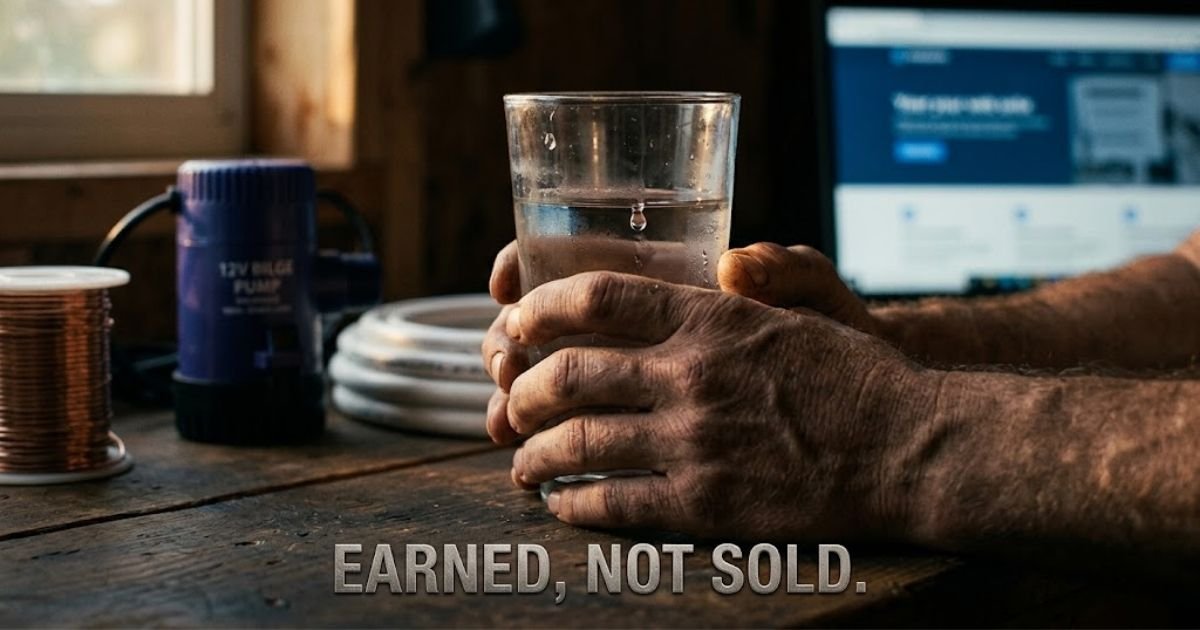
You know the feeling. It’s late, the house is quiet, and you’re staring at a sales page
promising the Water Freedom System pros and cons will help you make an informed decision
before investing in water independence…
But then, that quiet, cynical voice in the back of your head speaks up. Is this just another prepper pipe dream?
I get it. I’ve been there. In a world where municipal grids feel increasingly fragile and the news is a relentless drumbeat of infrastructure failures, the promise of limitless, free water is intoxicating. But I don’t trust glossy sales pages. I trust physics, I trust data, and I trust my own two hands.
So, I didn’t just read the marketing. I bought the Water Freedom System. I printed the blueprints. I got PVC primer on my jeans. And I put the whole thing through a brutal, real-world autopsy.
What follows is the unvarnished truth. No fluff. No spin. Just the heavy pros, the hidden cons, and exactly what the sales page conveniently leaves out.
Water Freedom System Pros and Cons: The Complete Unmasking
Before we talk about water yield, we need to talk about what you’re actually buying. The biggest point of failure for most people isn’t the system itself; it’s a fundamental misunderstanding of the product.
What Exactly is the Water Freedom System? (Core Entities & Mechanics)
Let’s kill the biggest misconception right out of the gate: The Water Freedom System is not a physical machine shipped to your doorstep in a cardboard box.
It is a comprehensive, digital DIY blueprint… created by a former military contractor. You can check the official Water Freedom System blueprint here to see exactly what’s included. It teaches you how to build a decentralized, off-grid water generation and purification rig using easily sourced, hardware-store components.
The Core Entities:
- The Blueprint: The actual instructional manual.
- The Catchment Mechanism: A condensation-based collection method that pulls moisture from the air or captures rain.
- The Filtration Matrix: A multi-stage gravity-fed setup utilizing sand, activated carbon, and chemical/UV treatment to make the water safe to drink.
[Internal Linking Prompt: If you want to understand the broader science behind this, check out our Ultimate Guide to Off-Grid Water Sourcing to see how this fits into a larger survival ecosystem.]
The “Secret” Ingredient: Analyzing the DIY Water Generation Blueprint
The sales page leans heavily on terms like “secret switch” and “hidden component” to manufacture intrigue. Let’s translate that marketing speak into engineering reality.
The “secret” isn’t magic. It’s thermodynamics.
The blueprint relies on a simplified atmospheric water generation principle combined with a gravity-fed bio-filter. It uses a temperature differential to force condensation from ambient air, which is then routed through a layered filtration matrix of gravel, sand, and activated charcoal to strip out particulates and biological contaminants.
It’s brilliant in its simplicity. But you need to understand that you are buying knowledge, not a plug-and-play appliance. The “secret” is just applied basic science, packaged for the layman.
Water Freedom System Pros and Cons: Where It Actually Delivers
Once you strip away the hype, does the system actually work? When executed correctly, the pros are substantial.
True Water Independence: Off-Grid and Emergency Preparedness Metrics
The primary value proposition here is resilience. When the municipal grid fails—whether from a natural disaster, a frozen pipe, or something much worse—this system transitions from a fun weekend project to a critical life-support asset.
- Grid-Down Viability: The system requires zero municipal water pressure. It operates entirely on gravity and, if you opt for the solar-powered UV add-on, zero grid electricity.
- Source Agnostic: While optimized for atmospheric condensation and rainwater, the filtration matrix is robust enough to purify questionable surface water from a creek or pond in a true survival scenario.
- Decentralization: You are no longer reliant on a centralized utility. You own the means of production. There is a profound psychological shift that happens when you realize you no longer need permission to drink.
according to CDC guidelines on water disinfection
Cost-to-Yield Ratio: Calculating the ROI of DIY Water Purification
Let’s talk financials. The Water Freedom System retails for roughly $47. Compare that to the alternatives:
- Commercial AWG Systems: $2,000 to $8,000+
- High-End RO (Reverse Osmosis) Setup: $800 to $1,500+
- Bottled Water Stockpiling: $500+ per year for a family, with a finite shelf life.
If you spend about $150 on PVC pipes, a small bilge pump, charcoal, and sand to build the physical system, your total investment is under $200. If this system provides just two gallons of safe water a day, it pays for itself in less than a month compared to buying bottled water. From a purely financial perspective, the ROI is exceptional.
Accessibility and Ease of Assembly: A Non-Engineer’s Perspective
You do not need a degree in fluid dynamics to build this. The blueprint is specifically engineered for cognitive ease.
The instructions are highly visual, utilizing 3D diagrams and step-by-step photography. The materials list is mapped directly to standard inventory at stores like Home Depot or Lowe’s. During my build, the most “complex” task was drilling a perfectly centered hole in a PVC end-cap. If you can follow a Lego instruction manual, you can assemble this. It democratizes water independence.
Water Freedom System Cons: The Friction Points They Don’t Advertise
Here is where the autopsy gets gritty. The sales page shows a gleaming, perfectly assembled rig producing gallons of crystal-clear water in minutes. Here is the friction they don’t advertise.
The Time Tax: How Long Does the Setup Really Take?
The marketing implies you can build this in an afternoon. False.
While the actual assembly took me about three hours, the project took an entire weekend. Why? Because the blueprint doesn’t magically manifest the parts. You have to drive to multiple hardware stores, realize you forgot a specific PVC reducer, drive back, cut the pipes, test for leaks, and iterate. Factor in six to ten hours of total time from “clicking buy” to “drinking the first glass.” If you are short on time, this is a massive friction point.
Material Sourcing and Hidden Component Costs
We mentioned the $150 build cost earlier, but that requires precise execution. The “hidden” costs come from trial and error.
- Pump Burnout: The blueprint suggests a specific 12V bilge pump. If you buy a cheaper alternative to save a few bucks, it will burn out in three weeks.
- Fittings and Sealants: You will inevitably need extra Teflon tape, PVC primer, and silicone sealant to prevent micro-leaks.
- Power Source: If you want to run the pump or a UV sterilizer off-grid, you now need to factor in the cost of a small solar panel and a 12V battery.
The guide is cheap. The physical infrastructure requires a real, albeit moderate, financial and logistical commitment.
🔗 Check Current Price & 60-Day Money-Back Guarantee
Maintenance Realities: Filter Replacements and System Upkeep
The most dangerous lie in the survival niche is the “set it and forget it” myth. The Water Freedom System is a living, breathing mechanical entity.
- Bio-film Buildup: The sand and charcoal filters will eventually clog with biological matter. You must backwash or replace the media every few months, depending on your source water quality.
- Pump Maintenance: The impeller in the 12V pump will wear out.
- Water Testing: The blueprint teaches you how to filter water, but it does not include a lab-grade water testing kit. You must independently purchase water testing drops or strips to verify potability. Trust, but verify.
Look, I know what you’re thinking. Is the Water Freedom System just an elaborate scam to take my forty-seven bucks?
Here’s the honest answer: No. It is a legitimate, functional DIY guide. However, it is not a “magic box.” It requires physical labor, material costs, and ongoing maintenance. If you expect a physical machine delivered to your door that requires zero effort, you will feel scammed. If you want a legitimate blueprint to build your own system, it delivers exactly what it promises.
Will this actually work in my backyard if it doesn’t rain for a month?
That depends entirely on your humidity. The atmospheric condensation aspect relies on ambient moisture. If you live in a bone-dry climate, you will need to rely heavily on the rainwater catchment and surface water filtration aspects of the blueprint, rather than pulling water straight out of thin air.
Do I really need to test the water myself?
Yes. Absolutely. The filtration matrix is highly effective, but without a visual lab test, you are flying blind. Buy a cheap digital TDS meter and some coliform test strips. It’s a $20 investment that keeps you from drinking something that will put you in the hospital.
Water Freedom System vs. The Competition: Contextual Market Mapping
To truly understand the value here, we need to map it against the existing market. How does it actually stack up?
Commercial RO Systems vs. The Water Freedom DIY Approach
Reverse Osmosis (RO) is the gold standard for municipal water purification, but it has a fatal flaw for off-gridders: it requires high water pressure and wastes up to three gallons of water for every one gallon produced.
The Water Freedom System, by contrast, is a low-pressure, gravity-fed catchment system. It doesn’t waste water; it creates or catches it. If you are on a municipal grid and just want better-tasting tap water, buy an RO system. If you are preparing for grid-down or living off-grid, the DIY approach is vastly superior.
Atmospheric Water Generators (AWG): Why the Blueprint Beats High-Tech
High-end commercial AWGs use advanced thermoelectric cooling to pull water from the air. They are marvels of engineering, but they cost thousands of dollars and draw massive amounts of electricity.
The Water Freedom System mimics the concept of atmospheric generation but relies on passive condensation and simpler thermal dynamics. A commercial AWG might produce five to ten gallons a day. The DIY system will produce significantly less—often one to three gallons, highly dependent on ambient humidity. However, it does so for five percent of the cost and a fraction of the power requirement. It trades high-tech yield for high-tech resilience.
The Final Verdict: Who Should Buy the Water Freedom System?
After dismantling the hype, analyzing the physics, and getting my hands dirty with PVC primer, the verdict is clear. This is not for everyone. It is a highly specialized tool for a specific psychological and practical profile.
The Ideal User Profile (Preppers, Homesteaders, Frugal Innovators)
You should buy this if you identify with the following:
- The Pragmatic Prepper: You want grid-down resilience but refuse to spend $5,000 on commercial survival tech.
- The DIY Homesteader: You enjoy the process of building, tweaking, and mastering your own infrastructure. The “time tax” is actually a feature, not a bug, for you.
- The Frugal Innovator: You understand that spending $47 and $150 on materials to learn a lifelong skill yields a higher ROI than buying a finished product.
Who Should Walk Away (The “Done-For-You” Consumer)
Close the tab and walk away if:
- You want a physical product in the mail. (Again, it’s a digital PDF).
- You lack basic DIY aptitude. If the thought of cutting PVC pipe and wiring a 12V pump induces panic, this will end up as an expensive PDF in your spam folder.
- You need high-volume, instant water. If you are trying to supply a large family or livestock solely through atmospheric condensation in a low-humidity environment, the physics simply won’t support your needs.
[Click Here to Check the Current Price and 60-Day Money-Back Guarantee for the Water Freedom System] (Note: Backed by ClickBank’s industry-leading refund policy, meaning your risk is literally zero. If it doesn’t work for you, you don’t pay.)
Products / Tools / Resources
If you decide to pull the trigger and start building, don’t walk into the hardware store blind. Here is the gear I actually used and recommend to make sure your build survives its first winter.
- The 12V Bilge Pump (Rule 25 Series): The blueprint suggests a generic pump, but I highly recommend upgrading to the Rule 25 GPH. It’s marine-grade, handles dry runs without burning out immediately, and costs about twenty bucks more than the cheap alternatives. It’s worth every penny.
- Oatey PVC Primer and Cement: Don’t buy the clear cement. Get the purple primer and the medium-body clear cement. The purple primer actually softens the PVC to ensure a chemical weld, which is critical when you’re dealing with water pressure and gravity feeds.
- Activated Carbon (Coconut Shell Based): For the filtration matrix, skip the generic aquarium charcoal. Look for coconut-shell-based activated carbon blocks or granules. The micro-pore structure is vastly superior for trapping volatile organic compounds and improving taste.
- Digital TDS Meter & Coliform Test Strips: You cannot skip this. A basic digital Total Dissolved Solids meter will tell you if your filter media is exhausted, and a simple 100-count strip test will ensure you aren’t drinking E. coli.
- Silicone Sealant (Food Grade): You will need this for the catchment basin. Make sure it explicitly says “food safe” or “potable water safe” on the tube. Standard hardware store silicone will leach chemicals into your drinking supply.